










April 2025 by @pancake_analytics

Featured in the inaugural issue of Trading Card Pro Magazine, this article explores how data reveals hidden trends in the trading card market. From Pokémon to MTG, I break down what’s rising, what’s fading, and what collectors should know.


Understanding Real Value: Controlling for Inflation in Sports Card Market Updates
The sports card market has seen significant growth over the past few years, with indices showing impressive nominal returns. For example, a the CardLadder CL50 index might report a 160.88% increase over the past five years. However, to understand the true value of this increase, it’s essential to control for inflation.
In this article I will walk you through how to adjust nominal returns to account for inflation, using a practical example. I appreciate the collectors and content creators already making content about inflation rates and their relationship to trading cards. AIH Sports is the top of mind, as he often mentions inflation and other financial influences on sports card prices.

Let’s Define
Nominal vs. Real Returns
Before diving into the calculations, it’s important to understand the difference between nominal and real returns. Nominal returns are the raw percentage increases in value over a period, without any adjustments.
Real returns, on the other hand, are adjusted for inflation, providing a clearer picture of the actual purchasing power of your investment.
Let’s Explain
The Importance of Adjusting for Inflation
Inflation erodes the purchasing power of money over time. What $1 could buy five years ago is not the same as what $1 can buy today.
When evaluating long-term investments, it’s crucial to account for this erosion to understand the true growth of your investment.
Step-by-Step Guide to Adjusting for Inflation
In this section I’m going to share with you the 3 step approach to making this adjustment and getting to a more real increase over the past five years, not only for the CL50 but also the Pokémon TCG index.
The steps include gathering our necessary data from our sources : CardLadder, Bureau of Labor Statistics (BLS), and leveraging a US inflation Calculator. The calculating the inflation rate. Followed by adjusting the nominal increase for inflation.


Step 1: Gather the Necessary Data
The CardLadder CL50 Index
The CardLadder CL50 index is up 160.88% over the past five years (As of Monday, July, 15th, 2024).
The CardLadder Pokémon Index
The Pokémon TCG index is up 373.45% over the past five years. (As of Monday, July, 15th, 2024).
The Consumer Price Index
As of Monday, July, 15th, 2024, the Consumer Price Index (CPI) five years ago was 240 and the current CPI is 280.
Step 2: Calculate the Inflation Rate
First, let’s determine the cumulative inflation rate over the five-year period. This can be done using the formula: Current CPI divided by CPI from Five Years Ago.
Now let’s plug in our case study numbers, this would be inflation rate adjustment factor equals 280 divided by 240, giving us 1.1667. This factor tells us that prices have increased by approximately 16.67% due to inflation over the past five years.


Step 3: Adjust the Nominal Increase for Inflation
Next, we need to adjust the nominal increases for both indices to find the real increases. The formula for real increase is: Real Increase equals 1 plus Nominal Increase divided 1 plus Inflation Rate. This value is then subtracted by 1.
Real Increase for the CL50 Index:
((1+1.6088)/(1+0.1667))-1
(2.6088/1.1667)-1
1.2354-1
Real Increase The CL50 Index : 0.2354 or 23.54%
Real Increase for the Pokémon Index:
((1+3.7345)/(1+0.1667))-1
(4.7345/1.1667)-1
4.058-1
Real Increase The CL50 Index : 3.058 or 305.8%

Let’s make it all make sense
Should this approach be applied to sports cards?
After controlling for inflation, the real increase in the sports card index over the past five years is approximately 23.54%, significantly lower than the nominal increase of 160.88%. For the Pokémon TCG index, the real increase is approximately 305.8%, which is lower than the nominal increase of 373.45% but still significantly higher than the sports card index.
When considering whether this approach should be applied to sports cards, it’s important to recognize that sports cards, though often seen as collectibles, can also be considered a type of retail good. Retail goods are typically subject to general inflationary pressures, which can affect the costs associated with acquiring and trading these items. However, the value of collectibles like sports cards is also influenced by unique factors such as rarity, demand among collectors, and market trends specific to the sports memorabilia industry.
Therefore, while adjusting for inflation provides a baseline for understanding real returns, it is also crucial to account for these unique market dynamics. For instance, a surge in interest in a particular player or sport can dramatically affect card values independently of general inflation. Thus, while controlling for inflation is essential for a comprehensive financial analysis, it should be complemented with an understanding of the specific market factors at play in the sports card industry.
Incrementally is the Analytics Pancakes and Bacon, adjusting for inflation makes the meal more savory

Incremental Comparisons and Inflation Control
Another aspect to consider is whether inflation adjustments are necessary when comparing two different indices, such as the Pokémon TCG index versus the CL50 card index. If both indices are being compared over the same time period, the relative performance might still be valid without adjusting for inflation. However, to get an accurate sense of the real growth or decline in value, it is still beneficial to adjust both indices for inflation. This adjustment ensures that any comparison reflects changes in purchasing power and provides a more precise analysis of the performance of these indices in real terms.

Comparing Pokémon TCG Index to CL50 Index
Let’s take our previous calculations and directly compare the inflation-adjusted increases. The CL50 index, after adjusting for inflation, increased by 23.54% over five years, while the Pokémon TCG index saw a real increase of approximately 305.8% over the same period. This stark difference highlights the much higher growth in the Pokémon TCG market compared to the broader sports card market, even after accounting for inflation.

Why This Matters
“Sports Card Investors” often overlook inflation when evaluating long-term investments. By adjusting for inflation, you can make more informed decisions and better understand the real returns on your investments.
For those interested in further exploring the impact of inflation on investments, tools like the Bureau of Labor Statistics (BLS) for historical CPI data or the US Inflation Calculator can be incredibly useful.
Understanding real returns is a crucial aspect of smart investing. By incorporating inflation adjustments into your analysis, you ensure a clearer and more accurate evaluation of your shiny cardboard investments’ performance.


Dec 31, 2021 by @pancake_analytics
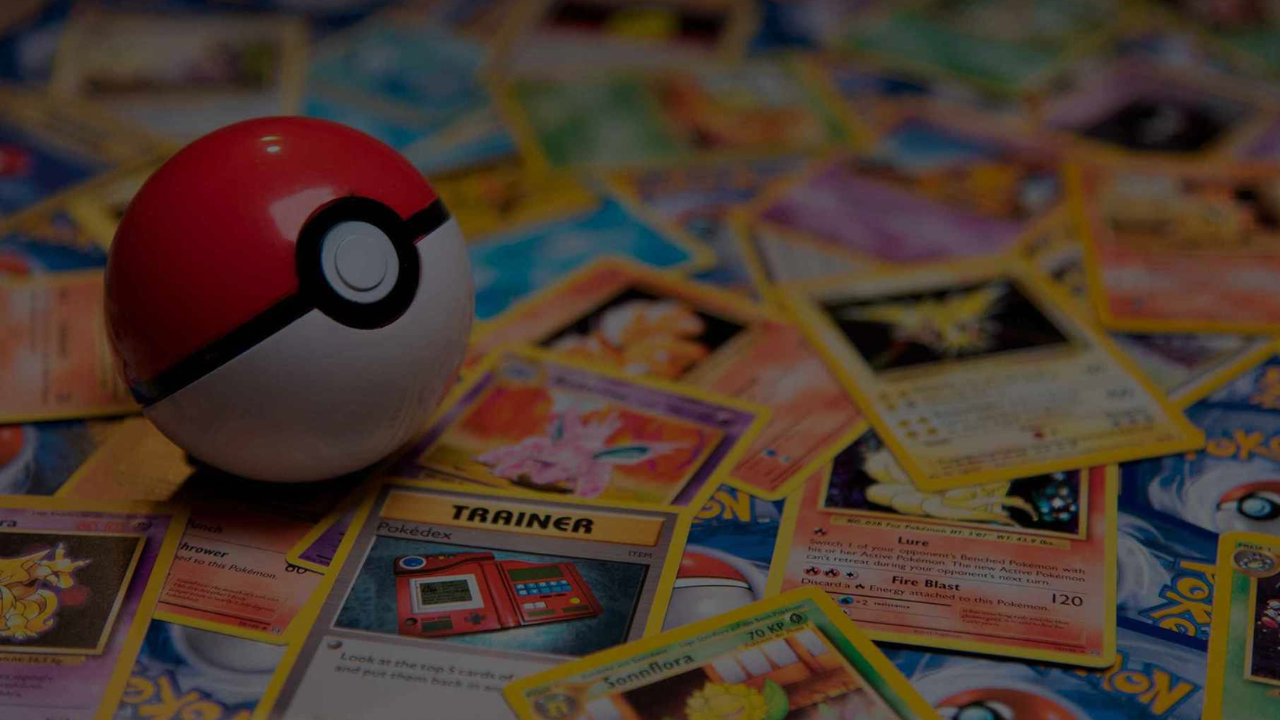
In this video I’ll identify the two months you should be selling Pokemon cards to maximize your selling potential ( seasonal trends and what a “dip” means in data ). The meat of this video is a polynomial regression model which will show you the 3 most important questions to answer before listing your psa 10 gem mint Pokemon card …
